The Health Perks of a Screen-Free Week

Published: May 4, 2026
It’s hard to imagine life before screens were everywhere. For most of us, our smart phones are always within reach. Whether we’re waiting in line at the grocery store, sitting on our couches watching TV, or traveling abroad — we can access almost any information we want at any time. For this Mental Health Awareness Month, Pause Before You Play is highlighting the impact that screens have on our mental well-being and physical health, and how a screen-free week can help us reconnect.
Statistics from Exploding Topics, a trend-spotting platform, found that the average American spent over six hours a day looking at screens in 2024. Many of those users, including one in four adults ages 18-29, reported between nine and 12 hours of screen time each day. As we learn more about the impacts of screen time, experts agree on one thing: too much screen time may be detrimental to our health (Stanford).
What is “excessive” screen time?
Excessive screen time is considered two or more hours outside of work or school, according to the National Heart, Lung, and Blood Institute (NIH). For heart-healthy living, medical experts from the NIH advise against any unnecessary screen time. Instead, physical activity is much better for your health and can relieve stress, improve sleep, increase energy, and much more.
Is screen time really that bad?
When screentime is limited, the negative impacts are less concerning. When screens are used consistently, we see the effects on our eyes, brains, and bodies much quicker. Depending on your age and lifestyle, screens can have different impacts on your health.
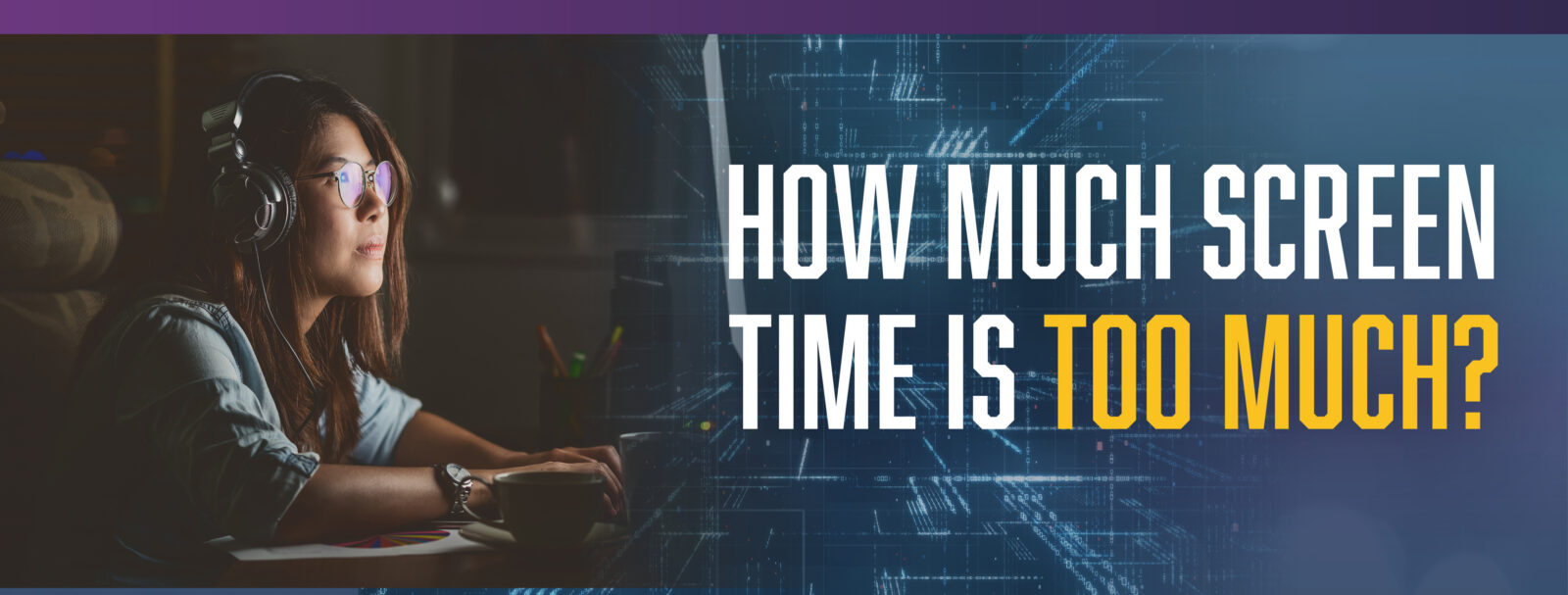
For adults ages 18-25, excessive screen time is shown to cause thinning of the cerebral cortex according to the Stanford Lifestyle Medicine. This is the layer of our brains responsible for processing memory and cognitive functions. When the cerebral cortex is impacted, a person’s ability to solve problems, make decisions, and retrieve memories can decrease. Likewise, a study at Wilfrid Laurier University found that adults with excessive screen time usage had lower gray matter volume. Stanford’s research highlights that the human brain needs gray matter tissue for daily human functioning, including movement, memory, emotions, and more (Standford). This is one way screen time can lead to early neurodegeneration.
For other adults who watched over five hours of TV a day, they were found to have an increased risk of developing brain-related disease like dementia, stroke, or Parkinson’s (Stanford). Another study found that light from screens, especially at night, can impact our melatonin release from the brain’s pineal gland — which causes individuals to experience difficulty falling and/or staying asleep. The American Optometric Association (AOA) also found adults with excess screen time were at risk for “Computer Vision Syndrome” — also known as digital eye strain, which may cause eyestrain, headaches, blurred vision, neck pain, and more.
Why does screen time feel good?
Our screens aren’t just a way to connect with others. Many individuals use screens for gaming or social media scrolling. When these activities give us something we like, like a prize or relatable video, our brain’s reward system is activated. The more our reward system is activated, the more we continue using — even if it interferes with our daily life. Though the algorithm may be smart, luckily the human brain is much smarter. You can reset with a simple break.
Reset your system with a digital detox
An article from the Washington Post highlights that a “digital detox” may erase 10 years of brain damage. Researchers at Harvard conducted a study with 373 participants who used social media regularly. After a one-week social media detox, participants had significantly reduced symptoms of anxiety, depression, insomnia, and more. In a larger, month-long study using the app Freedom to block internet access, 91% of participants felt either their mental health, attention span, and/or subjective wellbeing had improved significantly. Even participants who cheated and accessed the internet during the break still experienced positive effects from the break and in many, the positive effects lingered (Washington Post).
Take the break
This week is Screen-Free Week — where thousands are participating in a week-long digital detox. If you feel screen time has affected your wellbeing, now is a great time to commit to a small break. To help you, consider asking your family and friends to join you and turn your scrolling hours into time spent making memories with loved ones. Here are some effective methods to help you take the break this week:
- Turn off notifications from select apps.
- Set time limits on select apps from your smartphones’ settings.
- Switch to physical alarm clocks, planners, calendars, and other resources you use daily.
- Download a blocking app, like Freedom, that blocks internet access to your phone.
- Use a dumb phone or flip phone.
- Buy a “phone jail” to lock your phone for a set time.
After your digital detox, consider some methods to help minimize your screen time:
- The 20-20-20 rule. To alleviate digital eyestrain, take a 20-second break to view something 20 feet away every 20 minutes (AOA).
- Start a workout routine you enjoy. If consistent physical activity feels hard to prioritize, workout classes can be a great way to hold you accountable as you adjust to the routine.
- Focus on your hobbies. Whether you like to read, garden, build LEGO® sets, complete puzzles, knit, etc., keep your hobbies easily accessible so when you feel like checking your phone, you have other activities you enjoy within your reach.
Follow us at @Pausebeforeyouplay_oh on Instagram, @PBYP_OH on X, Pause Before You Play on Facebook, and Pause Before You Play on LinkedIn to stay updated on the latest responsible gambling information.
And if you or someone you know might be experiencing a gambling disorder, don’t hesitate to call the free and confidential Ohio Problem Gambling Helpline at 1-800-589-9966 or text 988. Trained and understanding specialists are ready to take your call 24/7. And now, the Ohio Gambling Telehealth Network offers virtual telehealth services at no cost.